

Why Prefabricated Buildings Are Safer During Earthquakes? The New Standard for Modern Industrial Structures
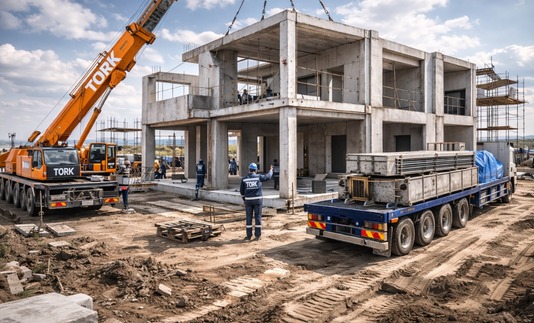
In Turkey, which is located in an earthquake zone, building safety is one of the most important criteria in investment decisions. Structural systems used in large-scale industrial facilities, production areas, and industrial buildings must have high earthquake resistance. The controlled behavior of load-bearing systems during an earthquake is critical for both human safety and the protection of investments.
Prefabricated concrete building systems, when designed with proper engineering calculations, offer strong and reliable results in terms of earthquake performance. One of the main advantages of these systems is that the load-bearing elements are produced in a controlled factory environment. Quality control processes applied during production ensure that the strength and reliability of the building elements meet higher standards.
The assembly process of prefabricated buildings also provides a significant advantage for earthquake performance. Factory-produced elements are assembled on-site using precise installation techniques and in accordance with engineering plans. This ensures that the structural system is created in a more controlled, safe, and robust manner.
Seismic Resistance in Prefabricated Concrete Buildings
The elements used in prefabricated concrete systems are made with high-strength concrete and prestressed steel reinforcements. This production technology allows the structural elements to have both high load-bearing capacity and controlled deformation behavior during an earthquake.
It is crucial for buildings to have a certain level of flexibility rather than being completely rigid during an earthquake. When designed according to engineering calculations, prefabricated concrete systems provide this flexibility, helping to distribute seismic energy more evenly across the structure.
Thanks to these features, prefabricated building systems stand out as a safe and durable solution, especially for large-span industrial buildings.
Key Advantages of Earthquake-Resistant Prefabricated Buildings
Prefabricated concrete building systems offer several important advantages in terms of earthquake safety. These advantages stem from both engineering design and production processes.
- Lighter Load-Bearing System
Prefabricated building systems can have lighter load-bearing structures compared to traditional reinforced concrete buildings. A lower overall building weight helps reduce horizontal forces during an earthquake. This allows the seismic effects to be handled more effectively and in a controlled manner.
- Load-Bearing Systems Capable of Spanning Large Openings
Prefabricated concrete systems allow large spans to be covered with fewer columns. This enables more flexible planning in industrial buildings and contributes to more efficient use of production areas. At the same time, it helps distribute seismic loads more evenly across the structure.
- High-Quality Standards Through Factory Production
Since prefabricated elements are manufactured in a factory environment, concrete quality, reinforcement placement, and production standards are continuously controlled. This ensures more reliable strength values for the elements and that the anticipated performance in the project is achieved accurately.
- Engineering Calculations Aligned with Structural Design
Prefabricated building projects are designed according to structural calculations and engineering analyses. The intended use of the building, the loads it will carry, and the seismic risk of the region are all considered, ensuring that structural elements perform safely under earthquake conditions.
The Importance of Prefabricated Systems in Industrial Buildings
Large-scale industrial buildings such as factories, production facilities, warehouses, and logistics centers involve significant investment costs. Therefore, it is crucial to choose durable and safe structural systems for such projects.
Prefabricated systems are increasingly preferred in industrial projects not only for earthquake safety but also due to fast construction times, high quality standards, and economic advantages. The ability to span large openings easily also allows more efficient planning of production areas.
Prefabricated concrete building systems provide a robust solution for earthquake safety due to their engineering-based design, controlled production processes, and high-strength properties. Tork Modular Building Systems contributes to safer and more sustainable industrial investments by delivering prefabricated solutions with high seismic resistance through structural calculations, engineering analyses, and quality-controlled production processes in its projects.